

Staff TV (or Corporate TV) refers to an internal video format that provides employees with information and engages them via screens on the premises using moving images and sound. Unlike the Digital on-board, Whilst the former focuses primarily on factual text-based information and static content, employee TV places the emphasis on audiovisual presentation – with the aim of bringing the corporate culture to life and fostering emotional connection. In addition to conveying information, the focus is also on motivation, fostering a sense of identification with the company and promoting a consistent communication culture.
Functionality
Digital displays and centralised management software are required to run an in-store TV system. Modern platforms enable content to be planned, updated and managed across individual locations or entire branch networks.
Staff TV is often part of a comprehensive digital signage strategy. Companies use centralised software platforms to manage internal communications, digital noticeboards, information screens and other screen-based applications across multiple sites. Solutions such as PRESTIGEenterprise support this approach by enabling the centralised control and planning of content for different target groups within the organisation.
Typical content in the retail sector
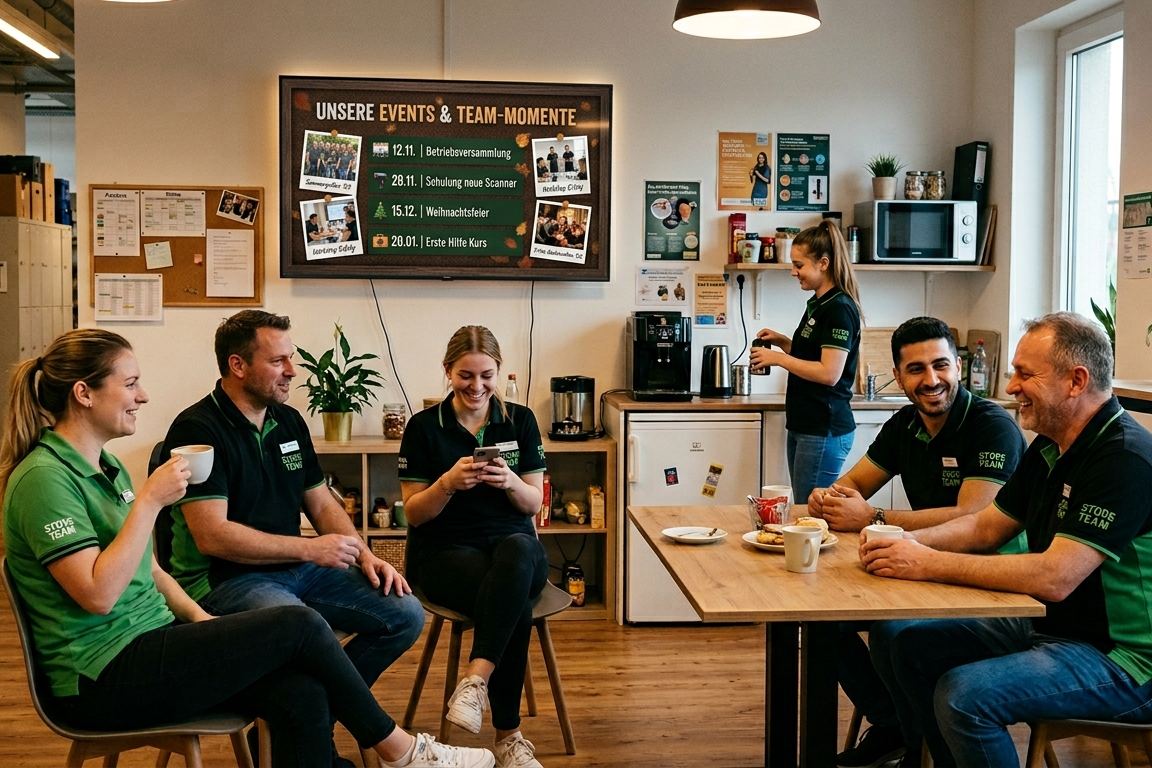
The aim of an employee TV system is to convey information in an engaging and easily understandable way. In addition to traditional company news, it can also feature videos, images, success stories, training content or current campaigns. This often allows information to be conveyed more quickly and in a way that grabs people’s attention more effectively than via email or printed notices.
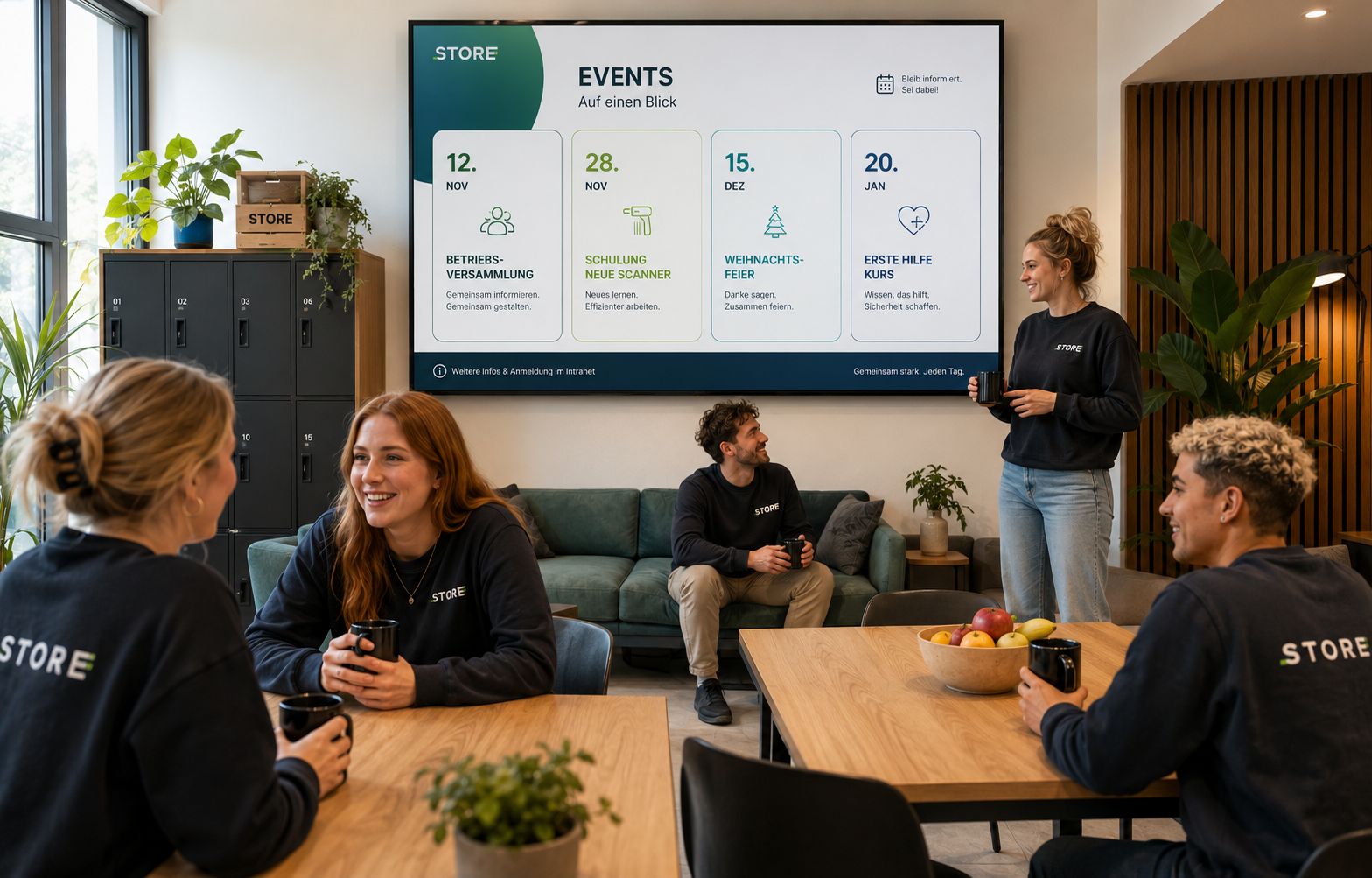
Typical content on an employee TV channel includes:
- Company news
- Video messages from the management or branch managers
- Welcoming new staff members
- Staff and team profiles
- Dates for internal events and training sessions
- New Products
- Anniversaries and birthdays
- Job and career opportunities
- Motivational messages ahead of peak sales periods, e.g. the Easter and Christmas shopping seasons
Distinction from the digital dashboard
Both systems use the same technical infrastructure – screen, player and CMS – and are often run on the same devices. The key difference lies in the content and the intended purpose of the communication:
| Characteristic | Digital dashboard | Staff TV |
| Contents | Text, images, tables | Video, animation, sound |
| Objective | Find out more | Identify, motivate |
| Production | Minimal effort | Medium to high effort |
| Actuality | Very high (real-time) | Short (production lead time) |
| Effect | Rational, functional | Emotional, culturally influential |
In practice, both formats are frequently combined: A screen alternates between displaying rota information from the Digital Cockpit and short video clips, in the style of an in-house staff TV channel.
Relevance for the retail sector
Staff TV is particularly well suited to retail companies with multiple branches that wish to foster a consistent corporate culture across all their sites. As the production of video content requires a certain amount of effort, this format is particularly worthwhile when content is created centrally and broadcast to many screens simultaneously. Software providers specialising in the retail sector enable the seamless management of both formats – digital signage and staff TV – within a single system.

About the author
Sandy Heinzmann has been supporting the digital development of bricks-and-mortar retail for over 15 years. Her focus is on the question of how technology, communication and customer experience can successfully interact at the point of sale. At Online Software AG, she deals with topics such as retail media, digital signage, electronic price tags, automation and artificial intelligence. In her specialist articles, she combines experience from retail projects with current market and technology trends. Her aim is to provide a clear understanding of complex developments and provide practical inspiration for retailers and retail organisations.