

A new dish of the day, changed prices or a short-term promotion - with traditional menus, every change means additional work. Digital menu boards provide a remedy here: Content can be controlled centrally, updated within a few minutes and adapted to different locations or times of day.
A menu board is a digital display board on which food, drinks, prices and current offers are displayed. Unlike printed displays or chalkboards, content can be updated centrally at any time without any physical effort. The term is derived from the English term for the classic menu (menu). In the digital context, it stands for a software-controlled system that dynamically manages and delivers screen content.
Modern menu boards usually consist of screens that can be centrally controlled and flexibly updated. They are mainly used in restaurants, cafés, bakeries, canteens, petrol stations and catering areas in the retail sector.
Functionality
Digital menu boards are part of digital signage solutions. They replace printed menus or static boards and allow content to be adapted quickly. Changes to prices, promotions or product ranges can be published on all connected screens within a few minutes.
The content of a digital menu board is created, managed and transmitted to the screens using software. Depending on the system, individual locations, branches or entire company groups can be controlled centrally.
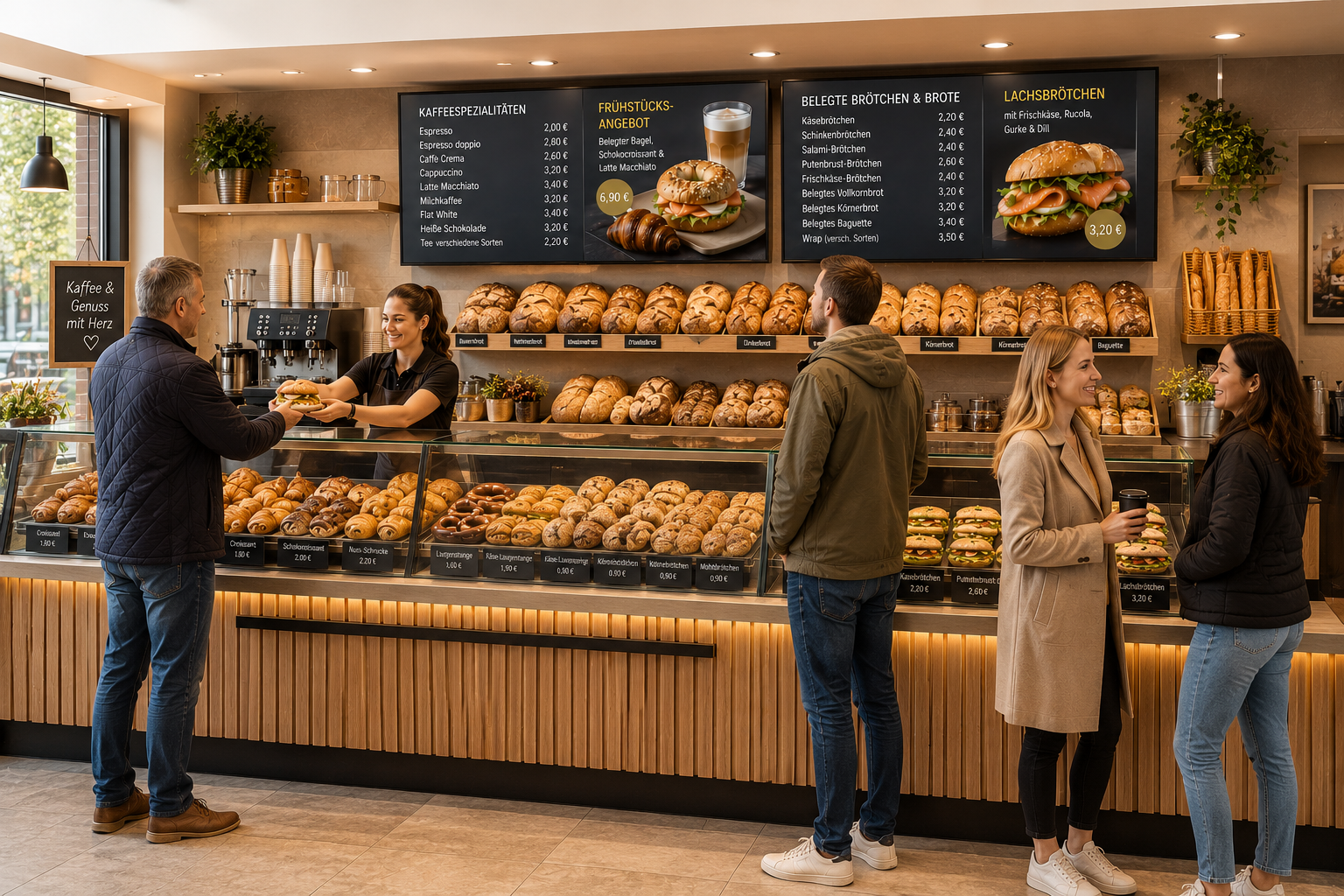
The following information is typically displayed:
- Food and drinks
- Prices and price changes
- Dishes of the day
- Special offers
- Product images and videos
- Allergens and additives
- Seasonal recommendations
The system consists of three core components:
- Content management software (CMS): This is where content - texts, prices, images, layouts - is created, organised and planned.
- Media Player / Hardware: A small player connects the CMS to the screen and plays the content.
- Display: Standard commercial screens or large format displays mounted at strategic points.
Many CMS solutions, such as PRESTIGEenterprise, also enable time-controlled display. For example, breakfast offers can be displayed in the morning, lunch menus at lunchtime and other products in the evening. In larger branch networks, regional specialities or location-specific promotions can be taken into account.
Examples and typical fields of application in retail
Digital menu boards are no longer only found in traditional catering establishments. Retailers are also using digital food communication for their gastronomic offerings.
In retail, they can be found in the following contexts:
| Field of application | Typical contents |
| Bakeries and bakery shops | Presentation of breakfast offers, snacks, coffee specialities and seasonal products. |
| Butcher's shops | Daily specials, prices, indications of origin Presentation of lunch dishes, salad bars, sushi offers or fresh food counters. |
| Supermarkets with catering area Supermarket cafeteria / bistro | Menu, weekly menu, calorie information Presentation of lunch dishes, salad bars, sushi offers or fresh food counters. |
| Delicatessen | Daily specials, prices, indications of origin |
| Petrol stations and convenience stores Petrol station shop with café | Hot beverage offers, combination deals Application of coffee-to-go offers, sandwiches or hot snacks. |
| Drugstore / Pharmacy (consultation zone) | Product recommendations, promotional information |
| Furniture stores and furniture markets | Communication of food and drinks in customer restaurants or cafés |
| Discounter with baking station | Product availability, prices in real time |
| Shopping centres and food courts | Clear presentation of menus, promotions and changing offers. |
In addition to prices and product names, allergens, nutritional information, origin information and seasonal promotions can be displayed - in compliance with current labelling requirements.
Relevance for the retail sector
Today's customers expect up-to-date information, clear orientation and attractive product displays. Digital menu boards help to visualise offers and influence purchasing decisions directly at the point of sale.
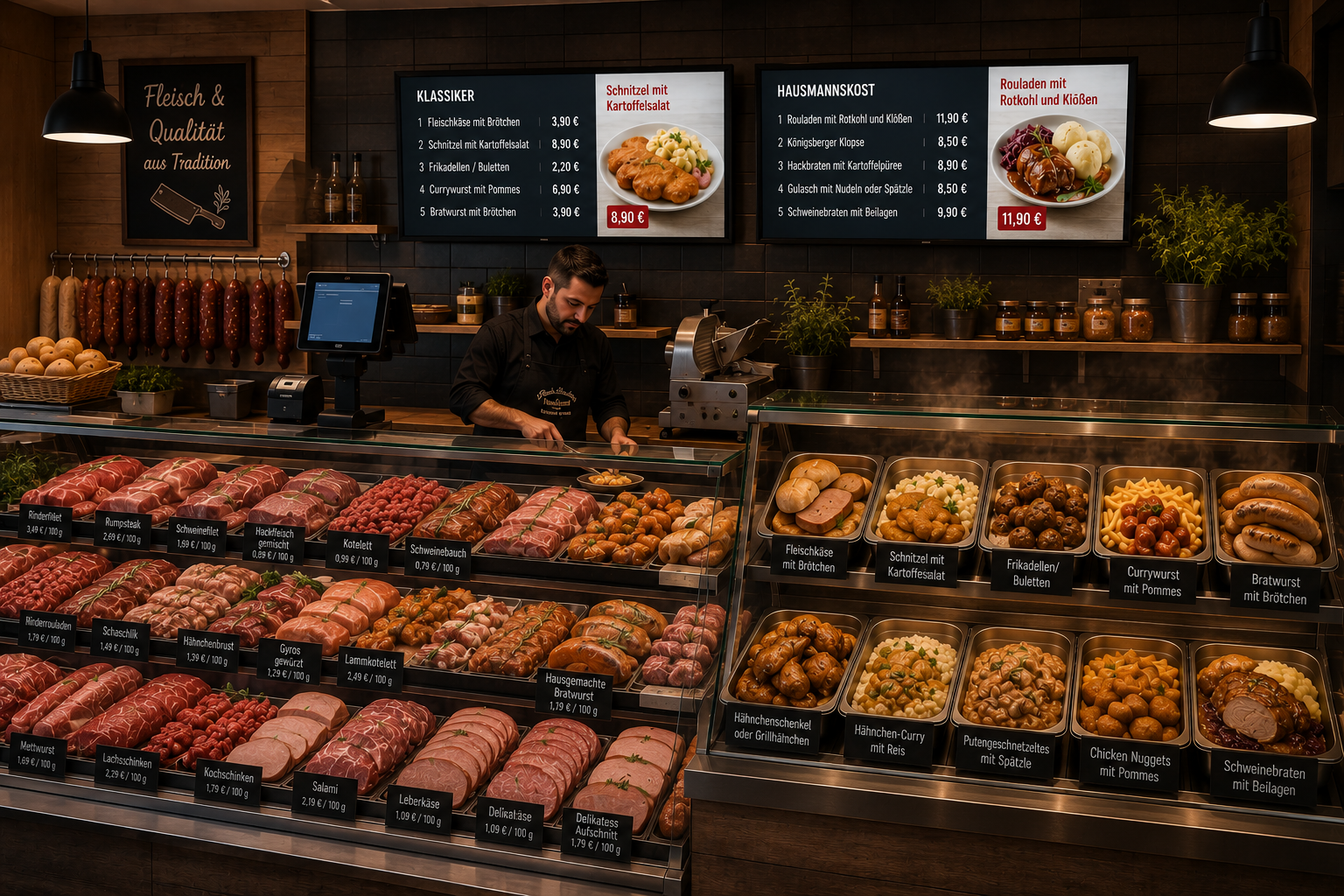
Digital menu boards also offer stationary retailers operational advantages. The most important potentials include
- Fast updating of prices and product ranges
- Standardised communication across multiple locations
- Greater attention through images, animations and videos
- Reduction of printing and replacement costs
- Support for seasonal campaigns and special offers
- Better control of sales and additional sales
Retailers with restaurants, bakeries or convenience stores in particular can use digital menu boards to modernise their customer communication and display targeted information.
If you want to manage digital menu boards across multiple locations, you should pay particular attention to centralised control options, flexible content planning and the integration of existing systems when selecting a digital signage solution. Platforms such as PRESTIGEenterprise help companies to centrally organise and efficiently operate menu boards and other screen applications.

About the author
Sandy Heinzmann has been supporting the digital development of bricks-and-mortar retail for over 15 years. Her focus is on the question of how technology, communication and customer experience can successfully interact at the point of sale. At Online Software AG, she deals with topics such as retail media, digital signage, electronic price tags, automation and artificial intelligence. In her specialist articles, she combines experience from retail projects with current market and technology trends. Her aim is to provide a clear understanding of complex developments and provide practical inspiration for retailers and retail organisations.